

Your students won’t want to miss this video about the eruption. No footage of the actual eruption exists, but scientists were able to create a reconstruction based on still photographs taken of the event.
Back to Teacher View
Student View
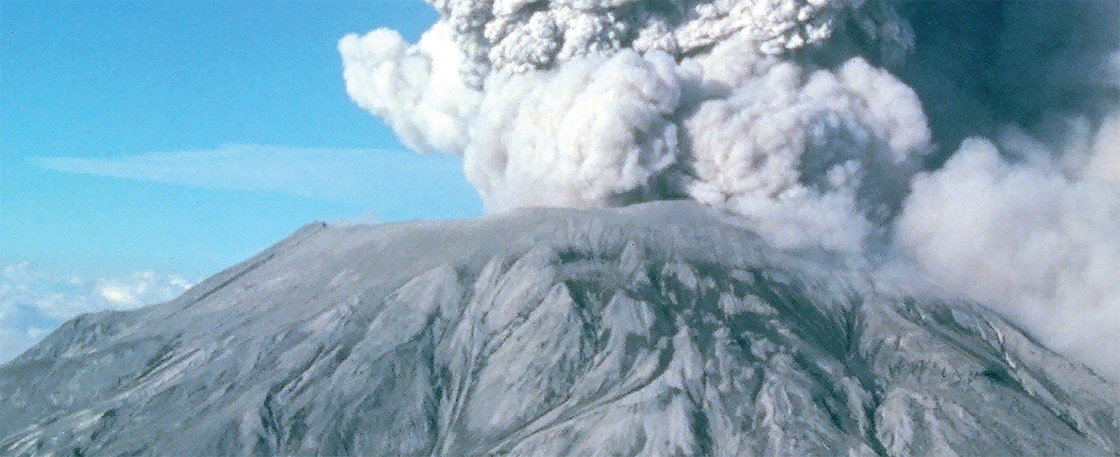
SCIENCE SOURCE/USGS/GETTY IMAGES
Mountain of Fire
In this narrative nonfiction feature, students will learn about 10-year-old Eric Smith’s experiences during the eruption of Mount St. Helens. The feature will build vocabulary and help students understand cause and effect.

By Lauren Tarshis
From the October / November 2017 Issue
Learning Objective: In this narrative nonfiction feature, students will learn about 10-year-old Eric Smith’s experiences during the eruption of Mount St. Helens. The feature will build vocabulary and help students understand cause and effect.
Lexiles: Starter, 470L, 570L, 780L
Guided Reading Level: M
DRA Level: 24
Featured Skill:
Cause and Effect,
Standards
video
(2)
video
(2)
Audio
()
Activities
(6)
Reading Kit
Skills Activities
Quizzes
(1)
Answer Key
(1)
video
(2)
video
(2)
Audio
()
Activities
(6)
Download All Quizzes and Activities
Reading Kit
Skills Activities
Quizzes
(1)
Answer Key
(1)
 Can’t-Miss Teaching Extras
Reconstructed Eruption Footage
Breaking News
Take your students back to May 18, 1980 with this newscast that aired the evening after the eruption. We recommend watching until the 4:11 mark to get a good sense of what was happening that day in Washington.
Volcano Infographic
Here is an easy-to-read infographic about volcanoes to go over with your students.
Try This!
To take the domain-specific vocabulary in this article even further, try this teacher’s creative visual approach, detailed on the Storyworks Ideabook.
Volcanic Learning Extensions!
Check out these learning extensions curated by our editors for this article!
More About the Article
Content-Area Connections
Social studies: United States history, geography
Science: volcanoes
Key Skills
Cause and effect, vocabulary, mood, compare and contrast, inference, descriptive details, author’s craft
Step-by-Step Lesson Plan
1. PREPARING TO READ
Watch a Video/Preview Text Features (25 minutes)
This story is accompanied by a Video Read-Aloud, which author Lauren Tarshis narrates. Exciting photos and footage help students visualize the story. Consider showing the video as a “first read.”
Look at pages 4-5 with the class. Direct students to the title, subhead, photograph, and caption. Ask them how the photo and caption help them predict what they will read about in the story. What do they visualize when they read the title? Point to the subhead. Ask: When do the events in this story take place?
Direct students to the map on page 6. Explain that the story’s events take place around Mount St. Helens in Washington State. Help students identify Mount St. Helens in the Cascade Range on the map.
Point to the photographs of Mount St. Helens on pages 7 and 8-9. Read aloud the titles and captions with the class. Encourage volunteers to describe what the mountain looked like before and after the eruption and what it looks like today.
Introduce Domain-Specific Vocabulary (15 minutes)
We have highlighted in bold the words that may be challenging and defined them on the page. Preview these words by projecting or distributing our vocabulary activity and completing it as a class. You can also play our interactive Vocabulary Slideshow.
Highlighted words: erupt, disastrous, unpredictable, debris, landslide, fury
Set a Purpose for Reading (5 minutes)
Both the Think and Read and Think and Write boxes on pages 4 and 9 support the featured skill, cause and effect. Call on two volunteers to read the text in the boxes aloud. Remind students to look for story details that tell how the Smith family was affected by the events of May 18, 1980.
2. CLOSE READING
Reading and Unpacking the Text
First read: Read the story as a class. Use the Pause and Think question at the end of each section to quickly check students’ comprehension.
Second read: Distribute the close-reading and critical-thinking questions to the class. Preview them together.
Have students read the article again as a class or in small groups, pausing to answer the questions. Discuss their answers together.
Close-Reading Questions (30 minutes)
- Read the third paragraph of the story. What mood or feeling does the author create? Point out sentences that add to this mood. (mood) The author creates a peaceful mood with sentences like “The boys happily talked about their plans,” “The only sound was the sizzle of bacon and eggs,” and “All around them, the woods were as quiet as a whisper.”
- Read “Silent Volcanoes.” What is the difference between an active and an extinct volcano? (compare and contrast) An active volcano can erupt, but an extinct volcano is unlikely to erupt.
- In “Warning Signs,” why did Eric and his family look “like ghosts” as they escaped from the forest? (inference; cause and effect) They looked like ghosts because they were covered in ash.
- In “Hoping for Safety,” what details help you imagine how the volcano affected the surrounding area? (descriptive details; cause and effect) The sentence “The area’s sparkling streams had turned into dirty soups of ash and mud” describes how the volcano ruined the once-clean water in the area.
- In the last paragraph, why do you think Eric and his brother were afraid to play outside for a while after the eruption? (inference) They were probably afraid that the volcano could erupt again.
Critical-Thinking Question (10 minutes)
- Mount St. Helens had started to rumble a few months before the volcano erupted. But it quieted down and people believed the area was safe. How did this affect what happened to the people the day of the eruption? (inference; cause and effect) Because people believed the area was safe, they continued to live in their homes near the mountain. Eric’s father thought it was safe enough to camp near the mountain. People in the area didn’t realize how dangerous the volcanic mountain was, so they got caught in the eruption.
3. SKILL BUILDING
Distribute our cause and effect activity sheet. Have students work in pairs to complete the activity.
Call on a volunteer to read the Think and Write box on page 9. Students can complete the task in class or as homework.
 Differentiate and Customize
For Partner Reading
Have pairs of students read the article together. Each student can read one section aloud. As students read, ask them to identify actions or events that affected the Smiths during and after the eruption of Mount St. Helens.
For Independent Readers
Ask students to reread the article. Have them write three questions they would like to ask Eric Smith about his experiences during and after the eruption. Encourage students to use some of the vocabulary words in their questions.
For Struggling Readers
Encourage students to describe what is happening in each photograph. Ask students towrite a one-sentence captionfor their favorite photo. Call on volunteers to read their captions aloud.
For Advanced Readers
Ask students to write a poem about the eruption. They should include details about how it looked, sounded, and felt to people in the area. Students can read their poems aloud in small groups.
For On Level Readers
Write a paragraph explaining how the Smiths were affected on the day of the eruption.
Text-to-Speech