

Did you know that our poems all come in audio format? Check out the audio to the left, and play it for your class as a fun “first read” of this poem. To boost fluency, you can have your students record themselves reciting the poem in pairs, listening back to their recordings and talking about how they could improve.
Back to Teacher View
Student View
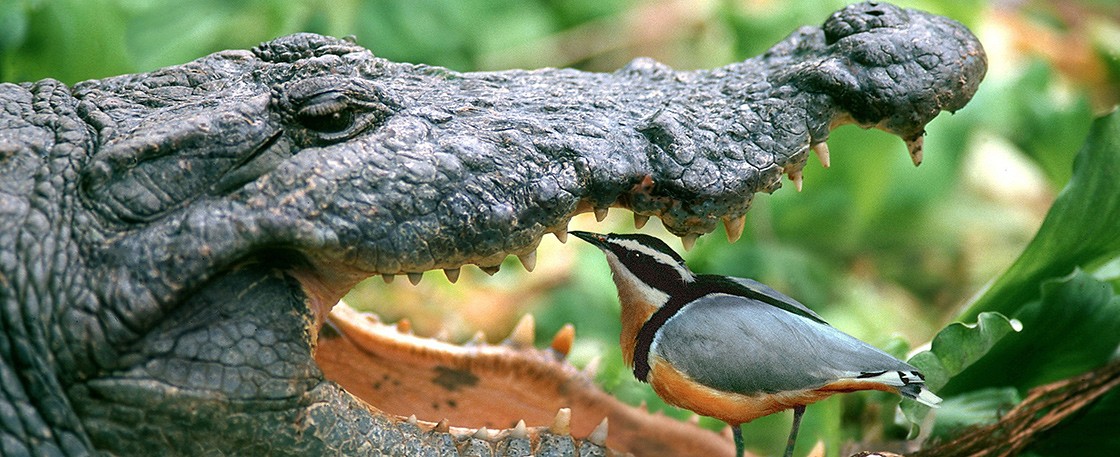
Juniors Bildarchiv GmbH/Alamy Stock Photo
The Wading Bird of Egypt
In this poem, you’ll learn about the surprising real life relationship between the plover bird and the crocodile.
By Eileen Spinelli
From the February 2018 Issue
Learning Objective: In this rhyming, descriptive poem, students will learn how two animals help each other.
Audio
()
Activities
(3)
Download All Activities
Skills Activities
Answer Key
(1)
 Can’t-Miss Teaching Extras
Audio Version
Eileen Spinelli
Let your students get to know poet and author Eileen Spinelli better by spending time on her site, where she has a great Q&A, a list of her dozens of books, and a Poem of the Month page. (Fun fact: her husband is children’s author Jerry Spinelli!)
The Longest River
Tell your students that the Nile River is the longest river in the world, at 4,100 miles. The entire U.S. is only 2,680 miles wide, which means the Nile would cross the country from west to east and then go back halfway across again! You might show this on a map of the U.S. to drive home the point.
Deadly Crocs
One reason why the plover is so brave: The Nile crocodile is vicious! According to National Geographic, they have a “somewhat deserved reputation as a man-eater,” as up to 200 people are killed by Nile crocodiles each year.
Poetry In The Classroom
Check out this post on the Storyworks Ideabook for some fabulous ideas for incorporating poetry into your classroom!
More About the Article
Key Skills
building knowledge, inference, main idea, synthesizing, vocabulary
Step-by-Step Lesson Plan
1. PREPARING TO READ
Set a Purpose for Reading (10 minutes)
• Begin by reading the Knowledge Builder bubble for the class. Ask students what they think is surprising about the relationship based on the photo.
• This poem is based on the concept of symbiosis, which is when two living things live together and help each other. Symbiosis is also the theme of “Ujiji,” our fiction story on page 14. It’s the perfect connection to this poem! Prompt students to think about how the crocodile and the plover each do something that helps the other.
• Project or distribute the vocabulary activity and discuss it as a class.
2. CLOSE READING
• Read the poem for the class or play our audio version.
• Project or distribute the close-reading and critical-thinking questions and discuss them as a class while students refer to the poem in their magazines.
Close-Reading and Critical-Thinking Questions (15 minutes)
• Why does the poet call the plover “brave,” “bold,” and “bolder”? (inference) The plover is brave and bold because it rides the back of a crocodile. It’s even bolder when it steps on the crocodile’s shoulder, down its snout, and into its mouth.
• Why does the bird enter the crocodile’s mouth, and why doesn’t the crocodile eat the bird when it’s in its mouth? (main idea) The bird goes in the crocodile’s mouth because it needs the food that it picks out of the crocodile’s teeth. The crocodile doesn’t eat the bird because it needs its teeth picked by the bird. They both benefit from this relationship.
• How is the relationship between the plover and the crocodile in this poem similar to the relationship between the tickbirds and the rhino in “Ujiji”? (synthesizing) In both relationships, each animal gets something it needs from the other. The plover gets food from the crocodile’s teeth, and the crocodile gets its teeth cleaned. In “Ujiji,” the tickbirds get food by eating the ticks off of the rhinoceros, and the rhino isn’t bitten by the ticks.
Text-to-Speech