

You can make a science connection with our story about Gitanjali Rao, the young girl who invented a water-testing device to help the people of Flint, Michigan.
Back to Teacher View
Student View
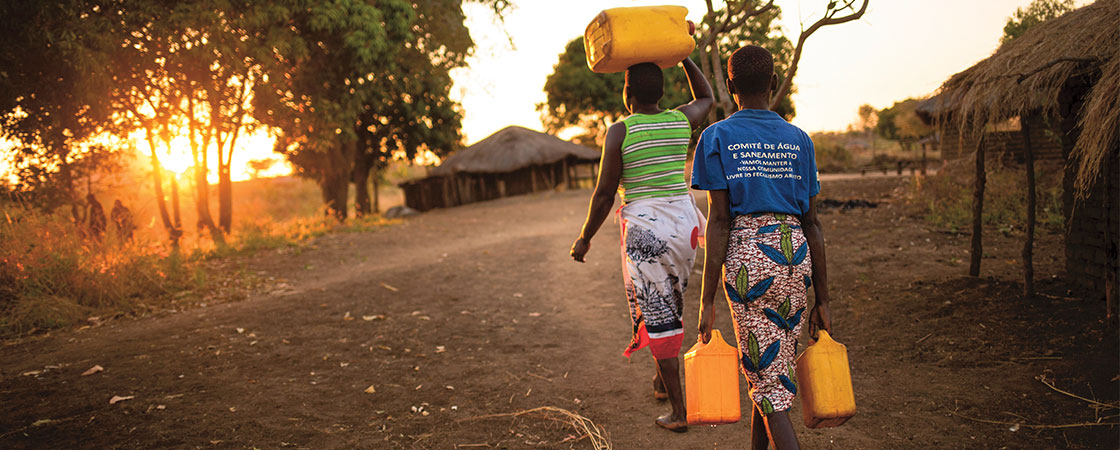
COURTESY OF MORRIS WEINTRAUB/CHARITY: WATER (ALL IMAGES)
Two Miles for a Drink of Water
In many places around the world, water doesn’t just flow from faucets. Girls spend hours a day collecting it for their families instead of going to school. Natalia was one of them—until her life changed forever.

By Kristin Lewis with Tyler Riewer
From the May / June 2019 Issue
Learning Objective: Students will learn how citizens in Mozambique, Africa, and in Flint, Michigan, solve similar problems. This pairing will help them compare and contrast information.
Lexiles: 400L-500L, 500L-600L, 700L-800L
Guided Reading Level: N
DRA Level: 28
Featured Skill:
Compare and Contrast,
Other Key Skills: key detail, summarizing, drawing conclusions, main idea, problem and solution
Standards
video
(1)
Audio
()
Activities
(5)
Reading Kit
Skills Activities
Quizzes
(5)
Quizzes
(5)
Quizzes
(5)
Quizzes
(5)
Quizzes
(5)
Answer Key
(1)
video
(1)
Audio
()
Activities
(5)
Download All Quizzes and Activities
Reading Kit
Skills Activities
Quizzes
(5)
Quizzes
(5)
Quizzes
(5)
Quizzes
(5)
Quizzes
(5)
Answer Key
(1)
 Can't-Miss Teaching Extras
From the Storyworks Jr. Archives
Watch This
Let your students get to know Mari by showing them this 3-minute video where she talks about her activism. You’ll also get background information on the Flint water crisis.
Watch This
Help your students better understand what goes into building a well by showing them this uplifting 5-minute video of the charity: water team building a well in Ethiopia. For an added geography element, show them Ethiopia on Google Earth.
Check It Out
Share this 3-page infographic with kid-friendly tips on how to save water. You can even print it and post it in your classroom!
Check It Out
Have your students entered our writing contests? Our contests are a fun way to boost writing skills. For tips on how to make entries stand out, read this post from our Ideabook blog!
More About the Article
Content-Area Connections
Social studies: World history, U.S. history, geography
Science: Health, technology, engineering, ecology
Social-emotional learning: Responsible decisionmaking (analyzing situations), relationship skills (teamwork)
Key Skills
Compare and contrast, key detail, summarizing, drawing conclusions, main idea, problem and solution
Step-by-Step Lesson Plan
1. PREPARING TO READ
Explore Text Features/ Set a Purpose for Reading (10 minutes)
- Direct students to the labels on page 10 that say “Paired Texts” and “One topic, two texts.” Ask students to read aloud the titles and subtitles on pages 10 and 13. Then ask students to identify the topic of both texts. (how two girls in different parts of the world face similar problems getting clean water)
- Point to the photos and captions on pages 10 and 12. Call on volunteers to read the captions aloud. Ask: What is the difference between how Natalia gets drinking water in each photo? (In the photo on page 10, she carries heavy jugs filled with water. In the photo on page 12, she pumps water from a well.)
- Point to the “Interview” label on page 13. Call on students to find and identify an example of an interview question and answer in the text.
- Ask volunteers to read aloud the Think and Read box on page 11 and the Think and Write box on page 13. As they read the article, remind them to look for details that describe the problems facing both Natalia and Mari and how they solve them.
Introduce Vocabulary (15 minutes)
- We have highlighted in bold seven terms and phrases that may be challenging and defined them on the page. Preview these terms by projecting or distributing our vocabulary activity and completing it as a class. You may also play our Vocabulary Slideshow.
- Highlighted terms: luxury, precious, developing countries, polluted, crisis, filter, protests
2. CLOSE READING
Reading and Unpacking the Text
- First read: Students should read the article and interview one time for general comprehension.
- Second read: Ask students to read the article and interview again. Have them identify any details or vocabulary words they don’t understand.
Close-Reading Questions (30 minutes)
- Read the first section of “Two Miles for a Drink of Water.” Why did Natalia leave her home so early in the morning? (key detail) She had to collect water for her family.
- Read “A Luxury.” How do most people in the United States feel about getting and using water? What about people in some other countries? (compare and contrast) Most Americans think it’s easy to get clean water when they need it. However, for millions of people around the world, clean water is a luxury and it can’t be wasted.
- Read “At Last, a Well.” How did the group charity: water help Natalia’s village? (summarizing) The group worked with a local group to build a well for the village with a hand pump.
- How do you think the villagers probably felt about this group? (drawing conclusions) The villagers were very grateful because they had clean drinking water for the first time.
- Read “A Better Life.” How is life different in the village since the well was built? (compare and contrast) Villagers rarely get sick, and they have clean water to drink and for bathing. How is life different for Natalia? Natalia goes to school regularly and is an excellent student. She is in charge of a team that watches over the well. She now has a hopeful future.
- Read “Little Miss Flint.” What made drinking water in Flint, Michigan, unsafe to drink? (main idea) The drinking water was polluted with lead, a metal that can cause health problems, especially in kids.
- What did Mari do to help solve the problems facing her city? (problem and solution) She wrote letters to anyone who could help, including then President Obama. She attended protests.
Critical-Thinking Question (10 minutes)
- How were the problems facing Natalia and Mari the same? How were they different? (compare and contrast) Natalia and Mari live in areas where the water has been polluted. Natalia lives in Mozambique, Africa, and Mari lives in Flint, Michigan. Because Natalia’s village didn’t have a well, she had to spend many hours each day collecting water for her family. Mari and her family had to drive to water stations to get clean water. The water in Natalia’s village was dirty and filled with germs. The water in Flint, Michigan, was polluted with lead.
3. SKILL BUILDING
- Distribute our Compare and Contrast Activity. Have students complete the activity in pairs.
- Discuss the writing assignment in the Think and Write box on page 13. Remind students to use quotation marks to set off the girls’ dialogue. Students can complete their writing assignment in class or as homework. Ask volunteers to read their imaginary conversations in pairs.
 Differentiate and Customize
For ELL Students
Have students listen to the lower-Lexile audio version of the article and read along. As they read ask them to look for the ways Natalia's and Mari’s problems are the same and different. Record their findings on a Venn diagram on the board.
For Independent Readers
Have students reread the articles. Then ask them to write a letter from either Natalia or Mari. Natalia writes to the director of charity: water and explains how getting clean water changed her life. Mari writes to the mayor of Flint, Michigan, about the water crisis there.
For Struggling Readers
Point out that both texts cover the same topic: the difficulty of getting clean water. But each story uses different text features. Reread the articles aloud while students follow along. Ask them to identify and read the subheads, captions, and interview questions.
For Advanced Readers
Ask students to do additional research about the group charity: water by visiting the website: www.charitywater.org. Have students record information about the organization on a poster. Students can discuss their posters in small groups.
Text-to-Speech