

For a fun activity, have your students survey their classmates to find out who prefers hamburgers (or cheeseburgers!) and who prefers tacos, and turn it into a bar graph.
Back to Teacher View
Student View
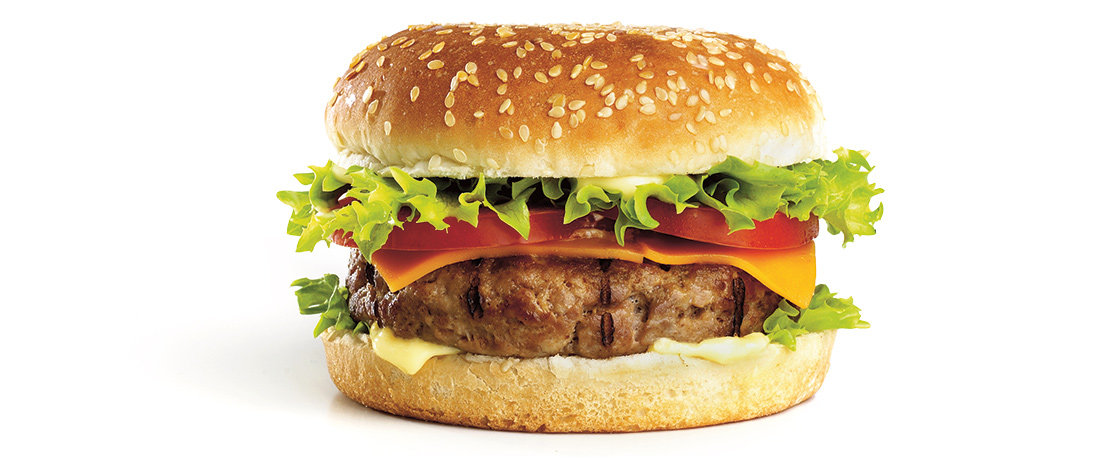
GETTY IMAGES/ISTOCKPHOTO.COM
Hamburger History/Tacos Take Over
Students will compare and contrast how the hamburger and the taco became popular in the United States.

By Lauren Tarshis
From the September 2017 Issue
Learning Objective: Students will compare and contrast how the hamburger and the taco became popular in the United States.
Lexiles: 570L, 670L, 1020L
Guided Reading Level: N
DRA Level: 28
Featured Skill:
Compare and Contrast,
Standards
Audio
()
Activities
(4)
Download All Quizzes and Activities
Reading Kit
Skills Activities
Quizzes
(1)
Answer Key
(1)
 Can’t-Miss Teaching Extras
Burger Vs. Taco
Americanized Cuisine
Ask your students if they can think of any other foreign foods that have become staples of American cuisine. You can prompt them with some examples, like pizza from Italy or hummus from the Middle East. Maybe some of your students even have foods from their own cultures that are becoming popular in America.
Inventor Controversy
We say in “Hamburger History” that other people besides Walter Anderson claimed they invented the hamburger. Two of those people are Charlie Nagreen, who said he served the first hamburger at a Wisconsin State Fair in 1885, and Frank Menches, who said he invented the hamburger and the ice cream cone!
"At Taca-Taca-Taco Bell!"
Here’s a Taco Bell commercial from the 1970s—we predict your kids will get a chuckle out of it!
Meat Inspection
You might tell your students more about the laws that protect us from unsafe meat. In 1906, journalist Upton Sinclair wrote a book called The Jungle which uncovered the unsafe and unsanitary practices of the meatpacking industry. After Sinclair’s book was published, the Meat Inspection Act of 1906 was passed to ensure that all meat was properly inspected before being sold.
More About the Article
Content-Area Connections
Social studies: immigration, history, geography
Science: inventors
Key Skills
compare and contrast, main idea and supporting details, key details, problem and solution, figurative language, cause and effect
Step-by-Step Lesson Plan
1. PREPARING TO READ
Preview Text Features/ Set a Purpose for Reading (10 minutes)
Have students look at the spreads on pages 10-11 and 12-13. Direct students to the headlines and subheads, as well as the labels on the upper left corner on page 10 that say “Paired Texts” and “One topic, two texts.” Ask students what the one topic is. (the history of popular foods in the U.S.)
Every story has a Think and Read box that helps give the students an idea or question to focus on as they read the articles. Call on a volunteer to read the Think and Read box on page 11 for the class.
Preview Vocabulary (15 minutes)
We have highlighted in bold the words that may be challenging and defined them on the page. Preview these words by projecting or distributing our vocabulary activity and completing it as a class. You may also use the vocabulary slideshow on our website.
Highlighted words: claimed, immigrants, dishonest, immediate, founded
Vocab Tip! Point out the word dishonest. Discuss the prefix dis and how it gives a clue about the word’s meaning.
2. CLOSE READING
Reading and Unpacking the Text
First read: Students should read the article through one time for general comprehension.
Second read: Distribute the close-reading and critical-thinking questions. Preview them as a class.
Have students read the story again, as a class or in small groups, pausing to answer the questions.
Close-Reading Questions (20 minutes)
- Read the first section of “Hamburger History.” Why did Walter Anderson hit the meatball on the grill? What happened when he did that? (key details; cause and effect) The meatball was taking too long to cook, so he angrily smacked it with his spatula. After he flattened the meatball, it cooked more quickly.
- Read the section “Ground Beef Problems.” What is one reason many Americans did not eat ground beef? (key details) Americans were afraid that ground beef was unhealthy. Dishonest butchers often put spoiled meat and fat scraps in it.
- In “A Clean Kitchen,” Anderson teams up with a businessman to open a restaurant that sells hamburgers. What did they need to do first? What is one way they succeeded? (problem and solution) First Anderson and his partner needed to change people’s fear of ground beef. So they let diners see the clean kitchen and watch workers cook the fresh meat.
- In the first section of “Tacos Take Over,” the text says that when Glen Bell took a bite of his first taco, “he also tasted his future.” What does that mean? (figurative language) It means that Bell realized that tacos would be a part of his future.
- According to “A Taste of Mexico,” why was Mexican food so important in California? (cause and effect) Because California shares a border with Mexico, many Mexican immigrants brought the recipes for their favorite foods with them when they came to the state.
- In “Restaurant Success,” what are three things Bell did to get people to enjoy tacos? (key details) Bell had to fry the taco shell right before it was served, so it did not become soggy. He created a taco sauce that wasn’t too spicy. He made his taco place seem more like a fast-food restaurant and less like a taco stand.
Critical-Thinking Question (10 minutes)
- Think about the ways Anderson and Bell made foods popular in the U.S. What challenges did they face? How did they overcome those challenges? (compare and contrast; key details) Both men had to help Americans feel comfortable eating a food they were not comfortable eating. Walter Anderson did that by letting diners see the food being cooked. He also called his restaurant White Castle, which made people feel like it was fancy. Glen Bell made his food less spicy and created a place that felt like a fast-food restaurant instead of a taco stand.
3. SKILL BUILDING
Connecting Texts
Distribute our compare and contrast activity.
Discuss the task in the Think and Write box on page 13. Then have students complete the task in class or as homework.
 Differentiate and Customize
For Independent Readers
Several locations are named in these two stories. Give students printouts of maps of the U.S., Mexico, and Europe. Then they can label these places on the maps and note why they were mentioned in the articles.
For Small Groups
After reading the whole feature as a class, assign a section of a text to each group. Students can read their section and discuss it. Then they can create a summary of their section to share with the class.
For Struggling Readers
Be sure to play our Vocabulary Slideshow. Pause between each word to reinforce its meaning. Encourage each student to point out at least one more unfamiliar word in the texts, and discuss these words as a group.
For Advanced Readers
Have students research to find other popular American foods that came from different countries. They can create a list of at least three of the foods and the countries from which they originated.
For On Level Readers
In what ways are the history of the hamburger and taco similar? In what ways are they different? Write a paragraph using information from both texts.
Text-to-Speech